HOTLINE: 0908 340 239
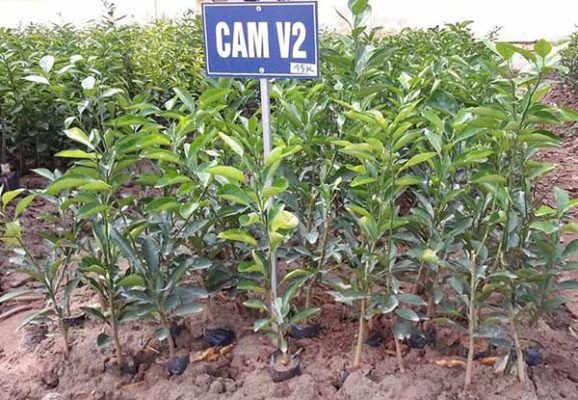
Among the many orange varieties cultivated in our country, a few stand out prominently. They possess numerous exceptional advantages due to their delicious flavor, sweet, juicy taste, and high yields. One such variety is the V2 orange. This is a relatively late-ripening orange variety compared to others, which is why its market price is consistently high.
The V2 orange is harvested from around the Lunar New Year (Tet) until the end of the third lunar month. It adapts well to a broad climate range and exhibits particularly strong disease resistance. The trees remain lush and develop in a well-balanced manner.
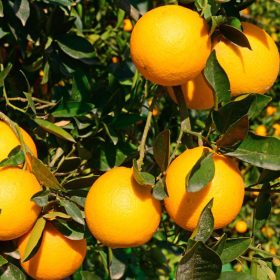
Compared to other orange varieties, V2 fruits are noticeably larger. An average fruit weighs approximately 190 – 250 grams. The skin is relatively thin, beautifully golden, with a bright yellow core inside, few seeds, thick segments, and a rich, sweet, refreshingly aromatic taste. Because V2 oranges have very few seeds, a large portion of the interior pulp can be utilized.
Due to these outstanding advantages, the cultivation area for this orange variety has been expanding rapidly. In the Northern region, this variety is typically distributed across localities such as Hoa Binh, Bac Kan, Cao Bang, etc. Because of its high quality and strong yields, local farmers regard the V2 orange as precious as gold and view it as a key economic development crop.
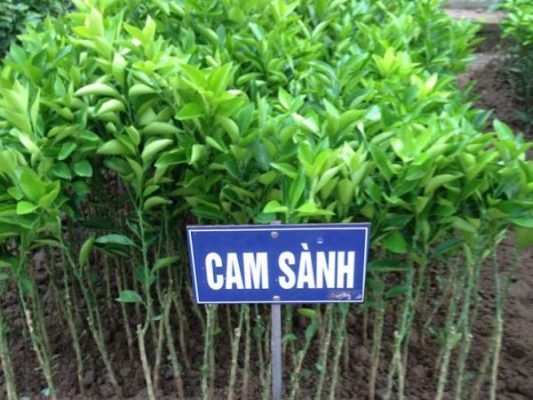
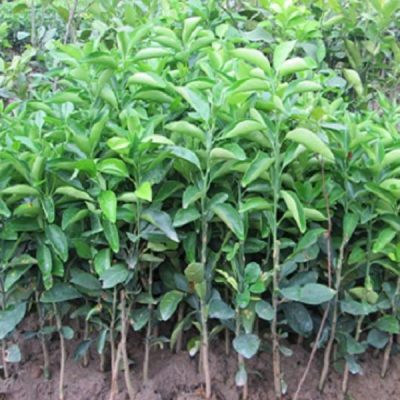
As an easy-to-grow variety that develops well, the V2 orange does not require intensive labor for maintenance. Currently, the planting stock consists of saplings grafted onto pomelo rootstock, ensuring strong and rapid growth and early fruit production.
Because V2 oranges possess long root systems that penetrate deeply, they require a deep soil layer for proper development—at least over 1 meter deep. The soil should be rich in humus, nutritious, loose, and well-drained. When planting, choose locations far from disease sources and pollution, and provide clean irrigation water.
One month before planting, prepare the soil thoroughly to eradicate underground pathogens by clearing bushes, leveling the ground, and reorganizing the orchard layout rationally. Clearing brush helps improve the soil and eliminates surface pathogens. Cultivating and turning the soil removes weeds and residues from previous crops, creating a loose surface that is easy to plant in while destroying harmful pathogens for a cleaner environment. Additionally, design the orchard so that trees are spaced at least 5 – 6 meters apart.
Pit digging: Dig pits at least one month before planting with minimum dimensions of 70 x 60 x 70 cm. When digging, separate the topsoil to one side and the subsoil to the other. After digging, let the surface dry for about 5 days, then apply a basal dressing of well-rotted manure, agricultural lime, and superphosphate around the pit to enrich the soil and sterilize pathogens.
Weed control: Keeping weeds under control is essential in fruit cultivation. Weeds around the orange base should be pulled out manually, while alleyways should be mowed regularly to keep the area around the base clean.
Watering: The V2 orange has a fairly high water demand and requires sufficient moisture to develop foliage and roots. Newly planted trees need daily watering. After 3 months, adjust watering according to weather conditions and soil moisture.
About 5 months after planting, when the tree canopy has grown sufficiently high, pruning can begin. This process helps shape the tree into 3–4 primary framework branches (Level 1) radiating evenly in four directions. From each primary branch, leave 3–4 secondary branches (Level 2), and continue this pattern. Regularly prune overly long branches to keep the canopy open and well-ventilated. Removing withered and diseased branches ensures optimal tree development.
Fertilization ensures that the trees remain healthy and vigorous, producing heavy, high-quality fruit yields. The fertilizer must be balanced and supply macro- and micronutrients such as N, P, K, etc. Annually supplement each tree base with about 30 kg of organic manure combined with chemical fertilizers. Apply by digging a trench about 30 cm deep in a ring around the tree, 40 cm away from the base, spreading the fertilizer evenly into the trench, and covering it with soil. Water immediately to help the fertilizer soak into the soil.
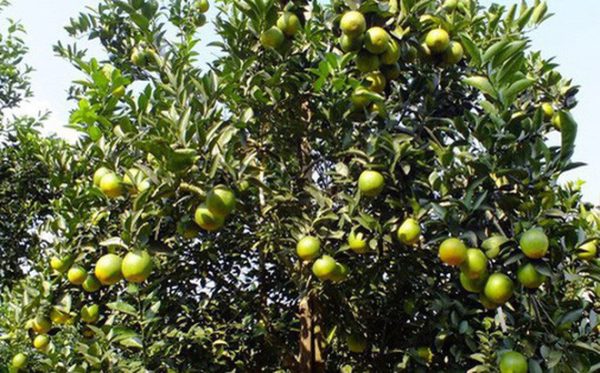
It takes nearly 2 months from flowering until the fruits ripen. At this stage, the oranges reach full maturity with glossy, tight, and large yellow skins. Harvest at the correct time for optimal quality, ideally when the fruit color turns 1/3 to 1/2 yellow. Use shears to cut the fruit stem to avoid scratching the skin and causing bruising. After harvesting, store in a cool, ventilated place and transport in foam crates to distribution markets.
The V2 orange is evaluated as a robust, fast-growing tree with fewer pest and disease issues than ordinary oranges. However, it can encounter typical ailments such as citrus canker, Greening disease (Huanglongbing / yellow shoot disease), or Tristeza virus. These diseases seriously impact tree health as well as fruit quality and yield. Therefore, regular monitoring and care are essential to keep the trees thriving and free from harmful pests and diseases.
 Zalo
Zalo