HOTLINE: 0908 340 239
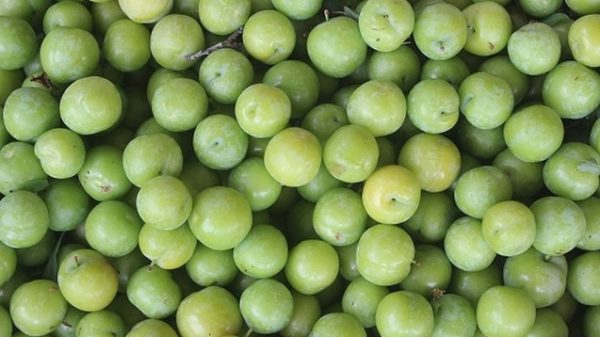
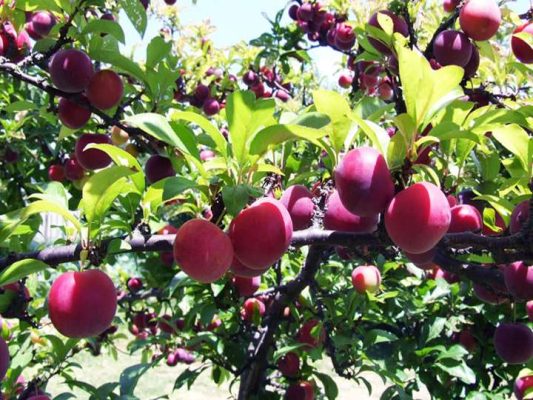
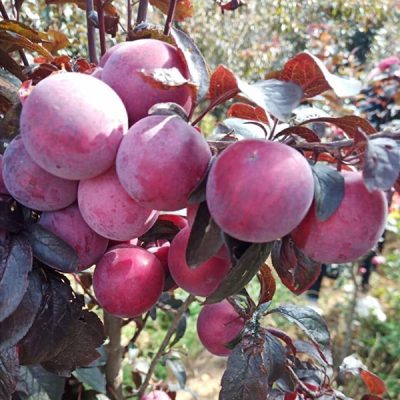
Tam Hoa plums are a popular fruit tree widely grown in our country. Therefore, it is necessary to master the cultivation techniques for plum trees to achieve the highest productivity and maximize profits. As a fruit variety cultivated in many parts of the world, its flowers and leaves emit a pleasant fragrance. If planted and cared for according to the proper technical procedures, Tam Hoa plum trees will yield flowers and fruits as desired, commanding high prices and serving as a poverty-reduction crop for mountainous farmers.
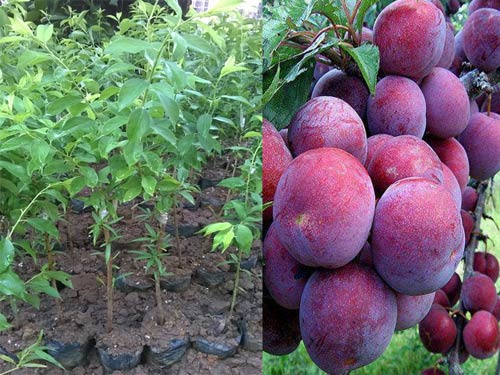
Select healthy, disease-free trees, planted using container-grown grafted trees.
Sapling standards: Bare-root saplings aged 12 to 24 months, plant height of 35 cm or more, trunk diameter from 0.6 to 0.8 cm, and graft union diameter measured 2 cm above the graft from 0.6 to 0.7 cm. Free of pests, diseases, and top dieback.
Planting Season: Plant Tam Hoa plums in February to March before spring budburst, and in November to December after leaf fall.
Density: 400 trees per hectare, with 5 meters between rows and 5 meters between trees.
Soil for growing plums should have an organic matter content of 2 to 2.5%, a depth of over 50 cm, loose and porous texture, good moisture-retaining capacity, and good drainage. Dig holes measuring 50x50x50 cm or 40x50x60 cm. Dig and separate the topsoil to place at the bottom of the hole. For land slopes under 7%, the planting hole should be level with the ground surface; for greater slopes, the planting hole can be 10 to 20 cm lower than the ground surface.
Apply to each hole 20 kg of decomposed farmyard manure + 0.2 kg of superphosphate + 0.1 kg of potassium chloride, mix thoroughly with the soil and fill the hole, and proceed with planting after 30 days.
Plant the tree in the center of the hole, open a small cavity in the middle of the planting hole, place the tree in position (use a knife to cut a line from top to bottom to remove the nursery bag), fill in the soil to hold the tree firmly, pack tightly around it, and water with 10 to 15 liters for 1 root. Insert a stake to secure the tree, tying it with nylon twine to prevent root disturbance. Cover the surrounding base with dry grass and debris to retain moisture for the tree.
Watering: Provide sufficient water for the tree, especially during the dry season, when fruits are enlarging, and when they are nearing maturity.
Weed Control: Cover the base with grass, debris, green manure crops, etc., to suppress weeds; loosen the surface crust after heavy rain. Weed during the spring season in January–February and the autumn season in August–September, weeding the entire area thoroughly once per season; hoe around the base 2–3 times a year.
Branch Pruning: Train and shape the tree to develop in a funnel shape. The purpose of funnel-shaped canopy training is to retain 3 to 4 primary branches originating from a single point on the main trunk, about 45 cm above the ground. These primary branches always form an angle so that the center of the tree opens up, with branches distributed evenly in all directions. Fruits grow from the side branches and these primary branches.
Fruit Thinning: Thin the fruits when they reach a diameter of 0.5 to 1 cm, and finish thinning before the pits harden. Space the fruits 5 to 7 cm apart. Thinning is done manually.
For trees in the basic construction stage:
1st Application (March): Apply 100% of the farmyard manure (20 kg), 70% superphosphate (0.35 kg), 50% urea (0.15 kg), and 50% potassium chloride (0.1 kg) to provide nutrients for spring shoots, flowers, and fruits.
2nd Application (July): Apply 15% superphosphate (0.075 kg), 25% urea (0.075 kg), and 25% potassium chloride (0.05 kg) to help the tree recover after the fruiting season.
3rd Application (November): Apply 15% superphosphate (0.075 kg), 25% urea (0.075 kg), and 25% potassium chloride (0.05 kg). Supply nutrients for the tree before dormancy, increase the lifespan of the foliage, limit premature leaf drop, and reduce rust disease.
For trees in the commercial stage:
1st Application (March): Apply 100% farmyard manure, 70% superphosphate, 50% urea, and 50% potassium chloride to provide nutrients for spring shoots, flowers, and fruits. Equivalent to 30 kg farmyard manure, 0.56–0.6 kg superphosphate, 0.25–0.35 kg urea, and 0.15–0.25 kg potassium chloride.
2nd Application (July): Apply 15% superphosphate, 25% urea, and 25% potassium chloride to help the tree recover after the fruiting season. Equivalent to 0.1–0.12 kg superphosphate, 0.125–0.175 kg urea, and 0.075–0.125 kg potassium chloride.
3rd Application (November): Apply the remaining nutrient amounts with 15% superphosphate, 25% urea, and 25% KCl. Equivalent to 0.1–0.12 kg superphosphate, 0.125–0.175 kg urea, and 0.075–0.125 kg potassium chloride. Supply nutrients for the tree before dormancy, increase the lifespan of the foliage, limit premature leaf drop, and reduce rust disease.
Application Method:
Organic manure: Dig a trench 20 cm deep around the tree canopy, spread the manure, and cover with soil.
Inorganic fertilizers: Clear away the mulch layer around the base, broadcast the fertilizer on the ground following the canopy line, then water the area and cover it with the mulch layer so that the fertilizer gradually seeps into the soil and to prevent evaporation losses.
Plum Aphids: Prevent and control aphids by spraying with Sherpa 0.2% in late November to early December to limit sources of damage on spring shoots. Alternatively, use Trebon or Applaud to eliminate aphids at the peak of shoot emergence, following the manufacturer's recommended concentration.
Shoot Borers: Use Regent or Padan, spraying twice in late spring/early summer and early autumn.
Stem Borers: Use Trebon or Decis 0.1% on cotton pads to stuff into the insect boreholes, and spray to destroy insect eggs.
Shot-hole Disease / Leaf Spot: Prevent and control by pruning, creating good ventilation for the orchard and canopy, and sanitizing and destroying diseased leaves. Spray preventatively with Mancozeb 80%, Ridomil 35%, etc., at doses recommended by the manufacturer.
Powdery Mildew: Prevent and control by pruning the tree and creating good ventilation within the canopy to reduce disease reservoirs. Use Mancozeb 80% or Ridomil 35% to spray preventatively.
Brown Rot: Prevent and control by spraying with fungicides such as Carbendazim, Rovral, etc., at concentrations recommended on the packaging 30 days before harvest to restrict the entry of fungi into the fruit.
Harvest when the fruits are ripe. If transportation over long distances is required, harvest when the maturity is about 79–90%, 7 to 10 days before the fruit ripens fully. Handle with care during harvesting to avoid bruising or scratching. Place harvested fruits into baskets lined with straw, wooden crates, or rigid boxes so they are not bruised during transit. Store plums in a dry, cool, and well-ventilated place.
 Zalo
Zalo