HOTLINE: 0908 340 239
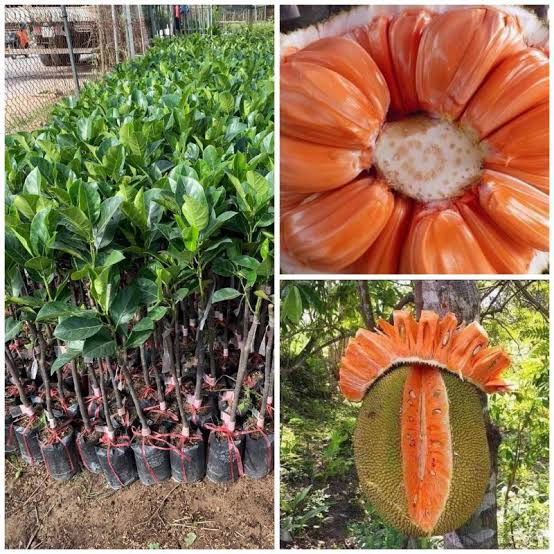
Technique for Cultivating and Caring for the Super-Early Red-Fleshed Jackfruit, Giant Fruits, and High Yield
The red-fleshed jackfruit is becoming a craze among farmers and gardening enthusiasts alike, thanks to its unique appearance, thick segments, crispy and deeply sweet flavor, and exceptionally high economic value. To grow a garden laden with heavy fruits, the first and most important step is to purchase quality saplings from reputable retail nurseries, ensuring they are true-to-type F1 varieties.
1. Plant Selection Standards
Origin: Choose saplings propagated through grafting or air-layering from healthy mother trees. This ensures that the young plants retain all superior traits: early fruiting, large fruit size, deep red flesh, and strong disease resistance.
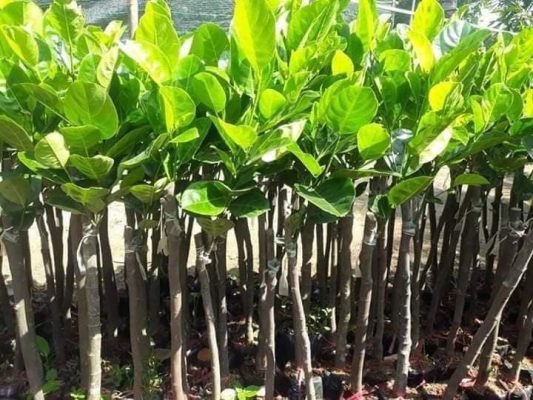
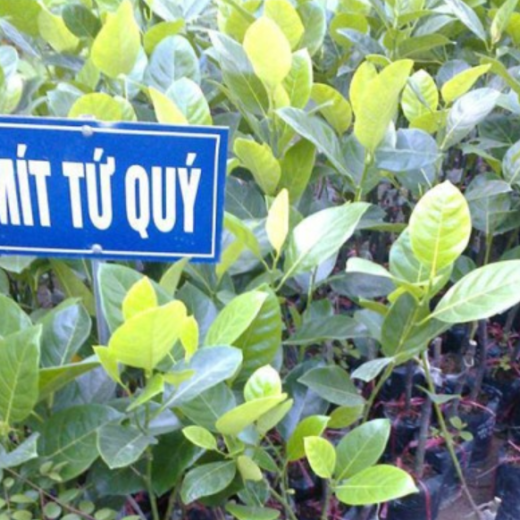
Appearance: Young plants should reach a height of 50 to 60 cm, with a rootstock diameter of 1 to 1.5 cm. The stems must be straight, with glossy green leaves, free of pests and diseases, and with a well-established root system in the nursery bag.
2. Soil and Pit Preparation
Soil: Red-fleshed jackfruit is not overly demanding regarding soil, but it thrives best in sandy loam, basaltic red soil, or alluvial soil that is nutrient-rich, loose, and well-drained.
Digging Pits: Dig pits with minimum dimensions of $60 \times 60 \times 60$ cm. Maintain a spacing of 4 to 5 meters between trees so the canopies have ample space for maximum development.
Base Fertilization (Basal Dressing): Thoroughly mix the topsoil with 10 to 15 kg of well-rotted manure, 0.5 kg of agricultural lime for sterilization, and 0.5 kg of Super Phosphate per pit. Prepare and compost the pits about 25 to 30 days before planting.
3. Planting Technique
Place the sapling bag in the exact center of the pit, gently cutting away the nylon wrapper to avoid damaging the root system.
Fill in soil level with the top of the root ball, gently firm the soil around the base, and stake the plant securely to prevent it from wobbling in strong winds.
Water thoroughly immediately after planting and cover the base with straw or dried grass to retain moisture. During the first month, provide partial shade if the weather is excessively hot.
4. Maintenance and Periodic Fertilization Schedule
Watering: Red-fleshed jackfruit tolerates drought quite well but is very sensitive to waterlogging. During the dry season, water regularly 2 to 3 times a week; during the rainy season, ensure a thorough drainage system to prevent water stagnation around the base, which causes root rot.
Topdressing by Stage:
First year: Apply balanced NPK fertilizers combined with well-rotted organic matter, every 2 to 3 months in small amounts to nourish the trunk and branches.
Second and third years: Increase the fertilizer amounts to coincide with growth and flowering phases. When the trees begin to fruit, supplement with higher potassium content to help the jackfruit segments develop a vibrant red color, a richer sweetness, and larger fruit size.
5. Pruning, Canopy Shaping, and Pest Management
Canopy Shaping: When the tree reaches about 1 meter in height, pinch the terminal bud to stimulate primary branches to grow evenly in all directions. Retain 3 to 4 of the healthiest branches to build a sturdy dome-shaped framework. Regularly prune out twiggy, diseased, or shaded inner branches to keep the orchard well-ventilated.
Pest and Disease Control: Red-fleshed jackfruit is commonly affected by stem borers, fruit flies, or mealybugs. Maintain a clean orchard environment and bag the fruits with specialized covers when they reach the size of a beer can to protect them from stinging insects effectively.
6. Harvesting
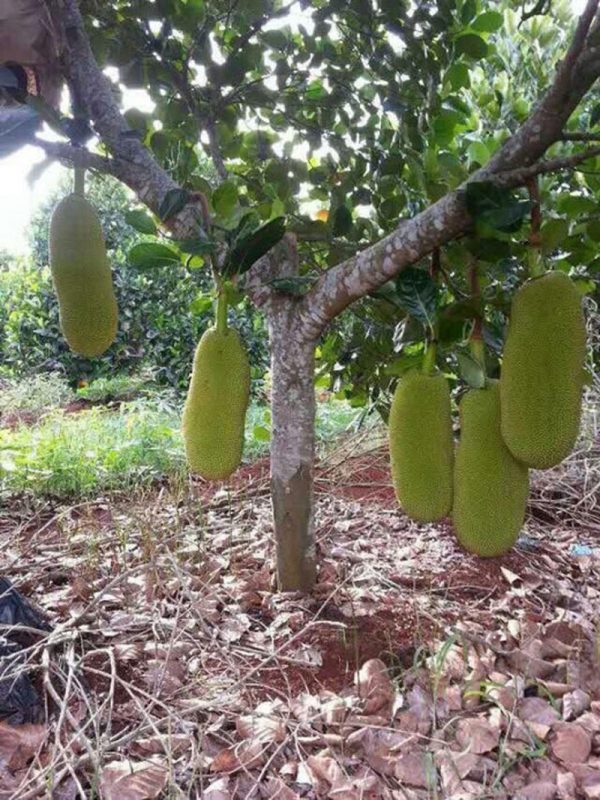
The red-fleshed jackfruit variety boasts a very fast growth rate, yielding its first crop of fruits just about 18 to 24 months after planting from a grafted sapling. When the jackfruit is ripe, the spikes on the skin are sparse and fully spread, turning a yellowish-green or bright yellow color, emitting a muffled thud when tapped, and releasing a distinct, delightful aroma, it is ready to be harvested and enjoyed.
 Zalo
Zalo