HOTLINE: 0908 340 239
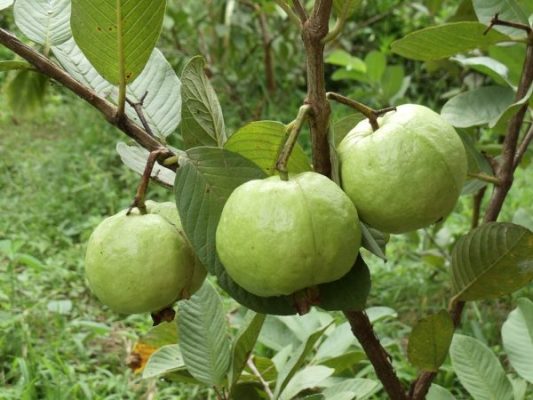
Growing seedless guava is not overly difficult, provided you master the proper cultivation techniques and diligently care for the trees through each developmental stage. Below are the essential techniques for growing and maintaining seedless guava:
Seedless guava can be adapted to various soil types. However, the most suitable soil is nutrient-rich loamy soil. Trees experience the most vigorous growth and highest yields in fertile alluvial soils. While relatively drought-tolerant, they cannot withstand prolonged waterlogging. The ideal soil pH ranges between 5.0 and 7.5.
Because this variety is seedless, the most effective propagation method is grafting or layering. Young saplings are propagated from mother trees, inheriting the exact traits and characteristics of the parent stock. Selected saplings must have strong, healthy trunks, a height of 50 cm or more, no signs of disease, and fully developed leaves and branches.
One month prior to planting, prepare the pits and apply basal fertilizer. The soil used for planting must be loose, well-aerated, and capable of retaining moisture. If planting in low-lying areas, build raised beds over 50 cm high to promote proper growth and prevent drought stress.
Pit Dimensions: Dig pits with a minimum size of 50 x 50 x 50 cm.
Planting Density: Space each pit 2.5 to 3.0 meters apart, corresponding to a density of 1,400 to 1,500 trees per hectare.
Basal Fertilization: After digging, apply about 10 kg of well-rotted organic manure per pit, along with agricultural lime for disinfection and a quantity of Superphosphate.
Place the young sapling in the center of the planting mound and pack the soil level with the top of the root ball. To prevent the plant from toppling due to wind or external factors, insert cross-stakes to secure the sapling and keep the base stable.
Moisture Retention: Apply a layer of straw or dried grass to mulch the base.
Shading and Watering: Newly planted seedless guava saplings are quite fragile, requiring temporary shading and regular watering until they establish sturdy growth. Maintain a watering frequency of twice daily until the plant produces two new flushes of shoots, then reduce to once daily.
Seedless guava is a moisture-loving plant. Ensure adequate soil moisture, especially during the newly planted stage when the trees are weak, and throughout the flowering and fruiting periods. Increase watering frequency during dry seasons, while promptly clearing and draining standing water immediately after heavy rainstorms during the rainy season to prevent waterlogging, root rot, and plant mortality.
To achieve high yields, abundant fruit production, and uniformly large fruit size, supplement watering with a periodic annual fertilization schedule. The required fertilizer dosage depends on soil fertility and plant health. Experienced growers often combine industrial poultry manure with NPK fertilizers to produce fruits weighing 500 to 700 grams uniformly across the orchard.
Year 1: Apply fertilizers every 2 months at a dosage of 150g NPK and 70g potassium chloride (KCl) per tree per application.
Year 2: Increase the fertilizer dosage to 400g NPK, 120g urea, and 150g KCl per tree, applied every 3 months.
Year 3 Onward: Apply fertilizers every 4 months, restricting application strictly to post-harvest and post-pruning windows. The required nutrient amounts per tree are 220g NPK, 120g urea, and 150g KCl.
To maximize yields, secure large fruit quality, and enhance sweetness, regular pruning and canopy shaping are necessary. Pruning enlarges the fruit size, encourages branching, and ensures all foliage receives optimal sunlight without competition. It also keeps trees at a manageable height of around 1.5 meters for easy care and harvesting.
Initial Pinching: When young trees reach 3 months of age and primary shoots grow long, prune away one-third of the main shoot length to stimulate the emergence of secondary branches (Level 2).
Framework Development: Once Level 2 branches grow long and strong, repeat the process by pinching the tips to develop tertiary branches (Level 3), continuing this pattern through Level 4 and Level 5.
Flowering Nodes: Flower buds typically emerge in pairs at the 4th or 5th leaf axils. When pruning, remove weak, small, or diseased shoots, retaining only 3 to 4 primary branches, 8 to 10 secondary branches, and well-distributed tertiary branches oriented in all directions.
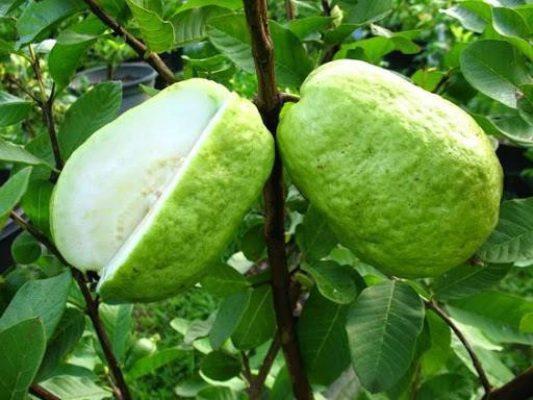
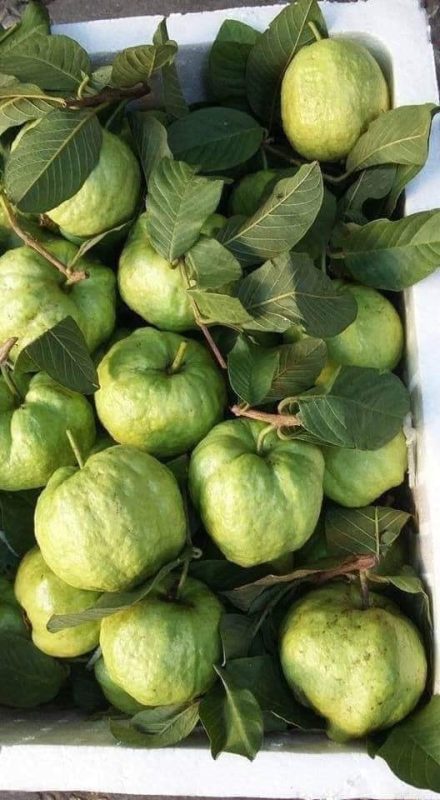
Approximately 9 months after applying these cultivation techniques, trees are ready for their first harvest. When ripe, the fruit takes on an elongated shape with smooth, bright green skin. The interior flesh is ivory-white, firm, crisp, and offers a sweet-and-sour flavor. Harvest ripe fruits gently in successive rounds until the crop is cleared. Store guavas in cool, ventilated places to maintain freshness.
 Zalo
Zalo