HOTLINE: 0908 340 239
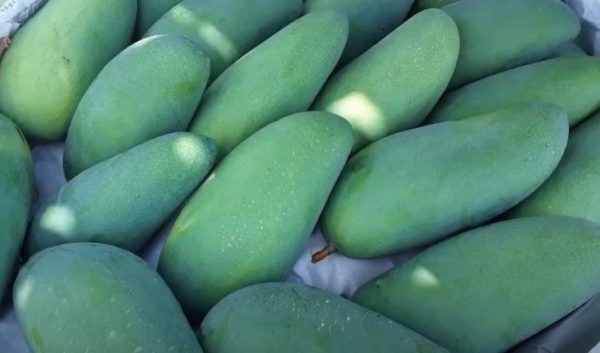
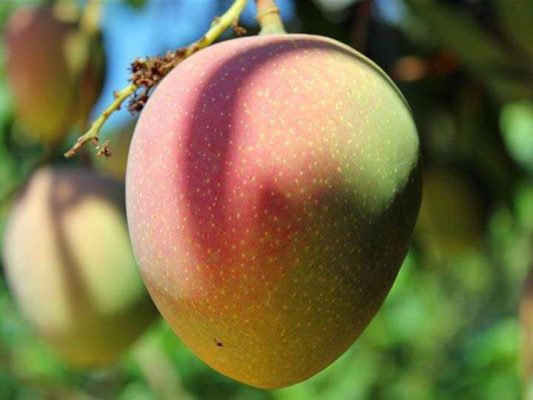
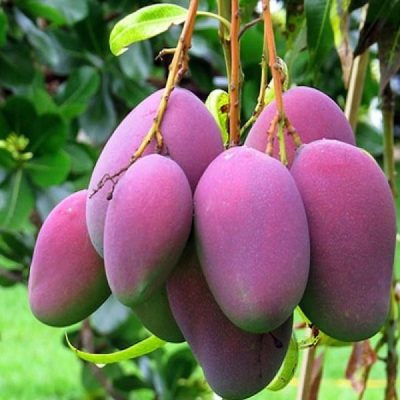
Mango is an evergreen tropical fruit tree belonging to the family Anacardiaceae. It is a perennial woody tree, typically growing 15 to 18 meters tall. The leaves grow in clusters and have a long lanceolate shape. Currently, many mango varieties have been domesticated and hybridized, among which the Taiwanese mango is extremely popular with consumers.
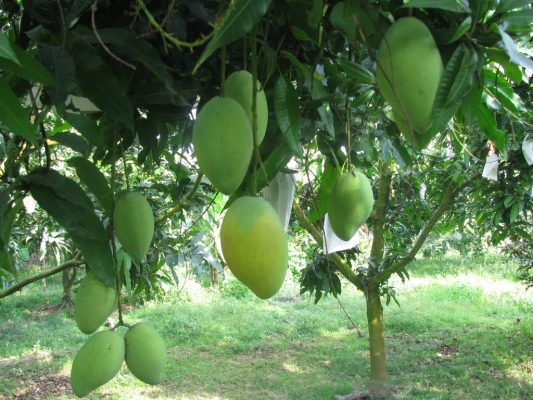
The flowering period is from January to March. The flowers are small and light yellow; they fade around the end of June, when fruit setting begins. July is the ripening and harvesting season. The fruit is large, with an oblong, slightly flattened, curved shape. It can grow up to 20 cm long, and the flesh is yellow, soft, and sweet when ripe.
Select delicious, sweet, low-fiber, and juicy mango varieties. Drain the mango seeds after eating, wash them clean, and dry them in the shade. Prepare multiple seeds at the same time to ensure a high survival rate. After about 2 days, the outer seed coat will dry out and turn a light beige color.
Carefully cut around the edge of the seed to remove the outer coat and extract the inner seed. Remove the brown seed membrane. Note that this peeling process must be done carefully, otherwise the seed can easily be damaged. Sprouting mango seeds is not difficult, but it requires dexterity.
Next, soak the processed seeds in water for 4 to 7 days. Note that during the soaking process, the water must be changed regularly to prevent it from smelling, becoming dirty, or getting contaminated with bacteria. Afterwards, you will obtain yellowish-green sprouted seeds. Without this water-soaking stage, the seeds easily rot.
Before planting the mango seeds in a pot, you need to choose a pot of an appropriate size.
The potting soil at this stage must be of high nutritional quality. It is best to use loam mixed with organic fertilizer.
Put the soil into the pot, pour a little water to moisten it adequately, and use a chopstick to poke suitable holes. Position the sprout pointing upward and the root downward, bury the seed in the planting soil with the upper part slightly exposed outside.
Place the pot outdoors in a bright, well-ventilated area. Spray water to irrigate once every 1 to 2 days.
About 4 days after planting, the sprouts will begin to grow tall and develop rapidly.
Promote the growth of new shoots by regular pruning. Pay attention to the following guidelines when pruning:
Shorten bearing branches: Prune bearing branches 1 to 2 times, with the cut located just below the apex.
Growth management: The bearing branches obtained next year will be longer than the previous year. Specifically, for leggy branches, cut off the green part down to the brown section (about 30 cm or more), but do not cut them too short. Since older base shoots have a higher rate of tip malformation after germination, this affects the quality of shoot and flower development in the following year.
Remove curved sections: Cut off some of the bent and sagging sections so that the angle between the new shoot and the parent branch is not too small.
Thin out unhealthy branches: Remove weak, diseased, overly dense, or excessively stiff and long branches.
Reconstructive pruning: Cut away some old, worn-out branches to allow the parent branches to regenerate.
Pre-bloom thinning: Between mid and late December, before flower spikes emerge, perform a thinning session to remove overly dense or sparse branches at the top to maintain good spatial distribution.
General application amounts should be determined based on soil and leaf analysis results, with estimated adjustments for increases or decreases over the years. Therefore, as the plant size increases during the year, the fertilizer amount must increase accordingly.
To produce 1 kg of fruit, each tree absorbs about 3.2 grams of nitrogen. Every 1 kg of fruit requires 23 grams of potassium nitrate (containing 14% nitrogen), 10 grams of ammonium nitrate (34% nitrogen), or 20 grams of Taifei No. 43 fertilizer.
If the average fruit yield is 60 kg per tree (for trees at least 8 years old), the fertilizer requirement per tree is 1,380 g of potassium nitrate or 600 g of ammonium nitrate. Most developing trees have not yet sprouted fruit, although some reserves are transported from other parts. However, the total nutrients consumed by the fruit range correspondingly from 40% to 120% (depending on the fruiting season; heavy fruit loads result in fewer emerging shoots, and lighter yields result in more shoots). Generally, if 160% is utilized, the fertilizer requirement per plant is 2,210 grams of potassium nitrate or 960 grams of ammonium nitrate.
Under partial cultivation conditions for over 35 strains, the required fertilizer amount per year per strain is at least 77 kg of nitrate or 34 kg of ammonium nitrate.
Before fruit development, necessary nutrients must be stored. To adequately and strongly nourish the fruiting branches, fertilizer application after harvesting accounts for 50% to 70%.
Apply 38 kg of potassium nitrate, 18 kg of ammonium nitrate, or 34 kg of Taiwanese No. 43 fertilizer during the fruit-setting period.
Apply as basal fertilizer in cycles or bands, keeping 90 to 160 cm away from the canopy edge and trunk. Dig holes 40 to 50 cm deep so that the fertilizer reaches 20 cm deep into the soil. This is the effective absorption range of the root system. If hole application is not possible, the fertilizer should at least be thoroughly mixed with the topsoil to be effective.
Adequate water is essential for plant vitality, and fertilizers can also be effectively absorbed through the roots.
Generally, July to October is the rainy season. The soil does not need extra irrigation unless the climate is abnormally dry. By October, temperatures drop and the soil gradually dries out. Consequently, shoots mature progressively. To prevent excessive shoot growth, stop watering the orchard to force the shoots to harden. Only mature shoots can undergo floral bud differentiation. At the same time, carbohydrate accumulation will benefit next year's flowering and fruiting. Otherwise, shoots will continue growing or remain immature, failing to complete floral bud differentiation and consuming excessive nutrients.
Prevent and control crop diseases and insect pests to minimize damage to shoots. The main diseases during shoot germination are anthracnose and algal leaf spot. Common pests include aphids, scale insects, thrips, leafhoppers, and psyllids.
Good control, along with effective water and fertilizer management, is required. Additionally, Bordeaux mixture (2 kg of copper sulfate and 2 kg of quicklime added to 200 liters of water) is the best protectant; spray to protect the branches once they have matured. Do not spray growing shoots or leaves, otherwise new leaves or shoots will easily burn. Meanwhile, weed regularly to prevent them from becoming breeding grounds or vectors for pathogens, and to reduce nutrient competition with the mango trees.
Under natural conditions, mangoes only bloom uniformly close to the Lunar New Year. However, many localities have gained useful experience in off-season mango cultivation through technical applications.
This is also why mangoes are available year-round. However, off-season mangoes command higher prices, bringing better economic returns to farmers.
The fertilizer regimen for off-season crops requires more input. For 7 to 10-year-old mango trees left to fruit naturally for one season, the harvest is about 100 kg of fruit per tree. With intensive off-season farming across two crops, yields increase by 1.5 times.
A 1-hectare mango farming model can yield an annual production of 30 to 35 tons, sometimes reaching up to 40 tons, with an average income of about 300 million VND per year.
To grow off-season mangoes with high yields, it is necessary to alternate various rainy-season pest prevention chemicals from the approved list of plant protection products.
Using 100% fruit bagging is highly effective. This practice prevents anthracnose and bacterial diseases. Bagging the fruit two months prior to harvest ensures zero chemical residues.
To produce off-season mangoes, orchard farmers must apply technical measures to nourish the trees, stimulate flower bud formation, encourage uniform blooming, protect blossoms, and nurture the fruit.
With the proper Taiwanese mango cultivation techniques, you can start enjoying your own mangoes in 2 to 4 years. Below are some useful tips on how to grow mangoes much faster so you can start harvesting and enjoying the delicious flavor from your orchard.
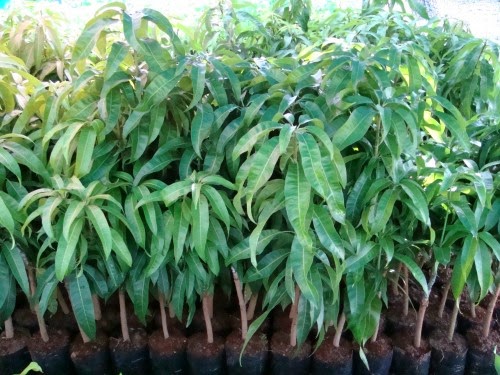
The first step toward stronger-growing mango trees is to acquire grafted saplings capable of thriving in the most favorable environment. Ensure the mango trees grow in fertile soil with optimal access to sunlight. Before planting, add some compost to the planting area or hole at a ratio of one part compost to four parts soil.
Ensure you water newly planted mango trees at least two or three times a week during the first week of planting by soaking the area around the mango trunk. In subsequent weeks, you can water the mango trees at least once or twice a week. Pull weeds around the base of the mango tree and keep the area weed-free. You can also apply a layer of mulch around the roots using organic materials like compost. This will help retain moisture around the tree roots while suppressing weeds.
When the mango tree begins new growth, ensure you fertilize it by feeding the plant a high-nitrogen fertilizer monthly for the next few months. As the tree grows larger, increase the fertilizer amount for the mango tree.
Before the mango tree begins to flower and fruit, feed it with a low-nitrogen plant food that promotes blooms and encourages flowering. Make sure you follow the product instructions for accurate application.
 Zalo
Zalo