
HOTLINE: 0908 340 239
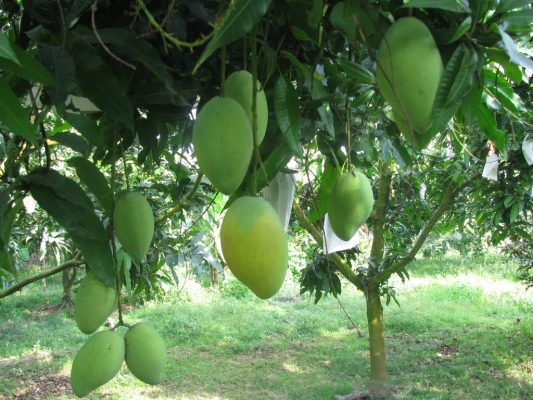
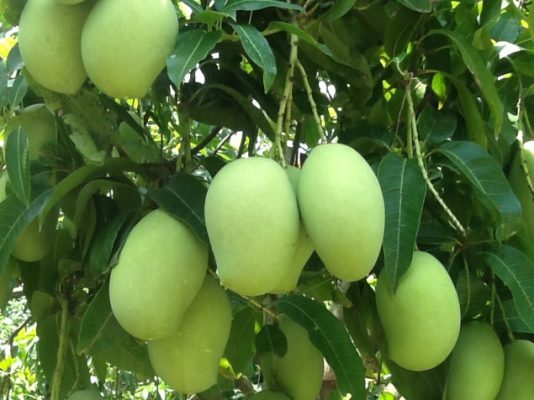
Recently, an extraordinarily large type of mango has appeared on the market. Many of these mangoes weigh up to 2 kg—double the size of normal mangoes. Upon research, it is known that this is the "Tu Quy" (Four-Season / All-Season) mango variety, which is widely cultivated in the southern provinces.
Mangoes are a popular fruit tree in tropical countries, including Vietnam. Suited to our country's soil and climatic conditions, mangoes grow and develop very vigorously with many different varieties stretching from North to South.
Among the various mango varieties widely cultivated today, the Tu Quy mango stands out. This variety not only boasts many advantages in appearance but also yields extremely high productivity with a short harvesting time, making it favored by many orchardists.
The most special feature when mentioning this mango variety is its impressive appearance. The Tu Quy mango is the largest among all current mango varieties. An average fruit weighs about 1.5 kg, with some specimens reaching up to 2 kg, leaving a strong impression on anyone seeing them for the first time.
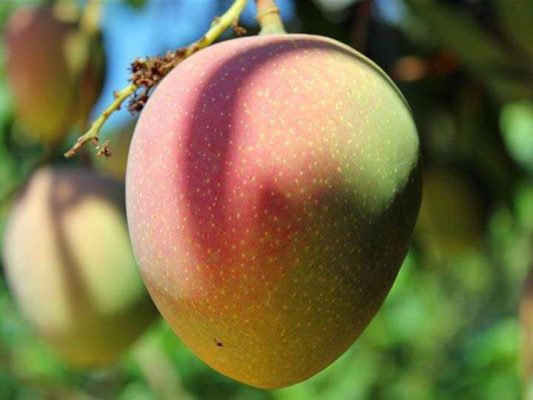
When ripe, the mango turns an eye-catching bright greenish-yellow. The flesh of the Tu Quy mango is low in fiber, high in starch, and quite crisp and sweet. Its skin is fairly thin and the seed is relatively small, resulting in a very high edible portion. Many people evaluate this mango as tasting much better when eaten before it is fully ripe than when it is completely mature.
Mangoes are a fruit rich in nutritional value for your health. Research shows that Tu Quy mangoes contain a high content of dietary fiber along with a series of various vitamins such as A, B, C, and K, as well as iron, calcium, and copper. In every 100g of mango, there are 100 calories, 23g of sugar, and 0.5g of fat.
Furthermore, the antioxidant content in mangoes is very high, helping the body boost its immune system and maintain a healthy, resilient condition. Regular consumption of mangoes can help prevent prostate disorders, asthma, and colorectal diseases.
It can be assessed that this Tu Quy mango variety has very good growth and development vigor. The tree is not picky about soil, yields early harvests, and most importantly, has extremely high productivity.
Tu Quy mangoes are best suited for sandy loam soil. However, according to many orchardists, this variety can also grow well in saline-alkaline or alum soils, where the trees still produce fair to average yields.
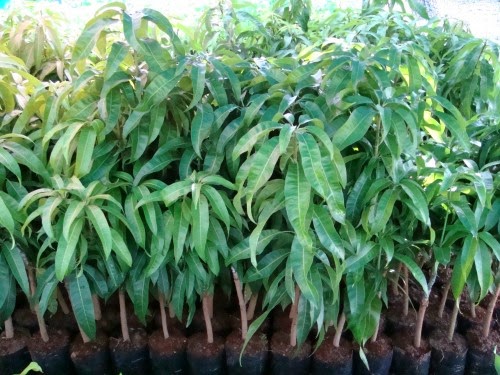
Tu Quy mango saplings are propagated by orchardists using layering or grafting methods. They select healthy parent trees with high and stable yields for grafting. The resulting saplings will carry 100% of the parent tree's traits. It is necessary to select healthy, disease-free saplings for planting to achieve higher yields and efficiency.
Location: Choose an airy location with plenty of sunlight. Tu Quy mangoes love sunlight and need about 6 hours of daily sunlight to thrive. In case of limited growing space, this variety can still adapt if grown in a pot, provided the pot has a diameter of 60 cm or more.
Soil Prep: Before planting, prepare the soil thoroughly by removing large stones and surrounding weeds. You can loosen the soil to make it porous before planting to help the tree grow better while ensuring the soil remains well-aerated and well-drained. For each planting hole, apply an amount of decomposed farmyard manure, 1 kg of Super Phosphate fertilizer, and agricultural lime to eradicate pathogens in the soil.
Planting: Plant the selected sapling into each prepared hole, maintaining a spacing of about 3 meters between trees. After planting, water around the base evenly. Newly planted soil needs to be kept moist for the first month to help the sapling adapt to the soil, root properly, and return to lush green growth.
During the initial period after planting, maintain regular watering once every 2 days. Note that during the dry season, you should increase the watering volume to prevent the tree from withering, while during the rainy season, you must ensure good soil drainage. As the tree grows larger, the watering frequency decreases, but moisture must still be maintained regularly.
When the tree is young, pay attention to clearing weeds underneath so the tree does not have to compete with them. This task needs to be done regularly to keep the soil well-aerated and limit pathogens that could affect the tree. Use a long-handled knife or hoe to cut down weeds around the base. The cut weed residue can be gathered, dried, and then composted around the base to create organic fertilizer for the tree.
Because the Tu Quy mango is a perennial woody tree, its canopy is quite large and wide. To make the tree bear more fruit, you must know the techniques of branch pruning and canopy shaping. When the tree reaches a height of 1 meter, prune the apical bud to develop primary (level 1) branches. From the level 1 branches, develop level 2 and level 3 branches, pruning them so that the branches spread out evenly in a circle around the trunk.
This is a very important task if you want to increase tree productivity. When the tree is blooming, you should spray pesticides to prevent leafhoppers from piercing and sucking sap, which causes the flowers to wither. You can use products like Sago Super and spray evenly over the tree. When the fruits reach 1 to 2 cm, they are prone to anthracnose, so you need to spray fungicides like Antracol. When the young fruits are 30 days old, you should bag the fruits to protect them from pests while preserving their future quality.
Fertilizing helps the tree absorb nutrients for growth while ensuring the future fruit quality is attractive and high-grade. Fertilization is usually divided into two stages:
Young Stage: Divided into two applications at the beginning and end of the rainy season. Apply 200–400g of NPK 16-16-8 fertilizer per root per application.
Mature Stage: At this stage, the tree requires more fertilizer. Apply at least 2 kg of NPK 16-16-8, divided into two applications at the beginning and end of the rainy season. In years with bountiful yields, you should increase the fertilizer amount to help the tree recover its health and continue bearing fruit the following year.
Tu Quy mangoes are harvested in the 4th, 8th, and 12th lunar months of each year. When ripe, the fruit turns a slightly yellowish color and is quite large. You should harvest when the fruit is moderately ripe for the best quality; do not harvest when it is overripe, as it will not taste as good. Wait for dry, sunny weather without rain to harvest, and store the fruits in a cool, well-ventilated place to keep Tu Quy mangoes fresh for longer.
 Zalo
Zalo