HOTLINE: 0908 340 239
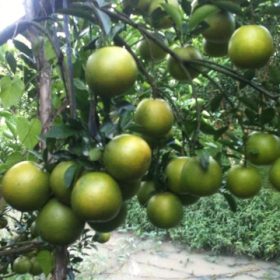
The Xoan orange is a crop that delivers exceptionally high economic efficiency to farmers in Can Tho. Not only does it yield high productivity, but its sweet and delicious flavor is rated the highest among all current orange varieties.
While the North is famous for varieties like cam sành and cam Cao Phong, the southern provinces—especially those in the Mekong Delta—are renowned for the Xoan orange. This is a long-cultivated variety in the region that consistently delivers very high yields.
Xoan orange trees can reach an average height of up to 5 meters. However, modern growers typically limit the tree's height, keeping it under 3 meters and encouraging horizontal canopy spread to increase productivity and facilitate easier care.
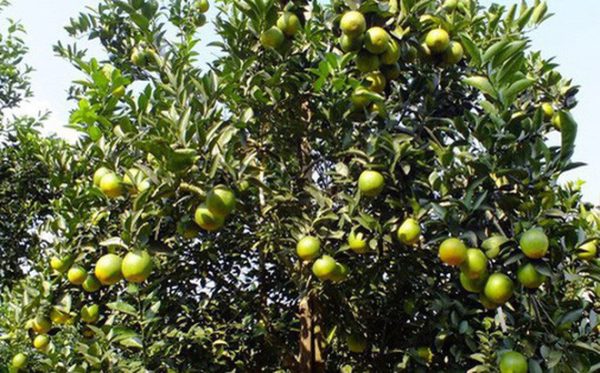
Xoan orange trees typically yield their first harvest about 30 months after planting. A key characteristic of this variety is that the fruits grow in clusters. The fruit is round, featuring a distinct circular ring with a diameter of 1–1.5 cm on the bottom. Around the stem, there is a small, slightly raised circular halo, which is why many locals affectionately call it the "two-coin orange" (cam xoàn 2 đồng tiền).
Unripe fruits are green, gradually turning lemon-yellow as they mature. The oranges have a thin, easily peelable skin enclosing pale yellow flesh with a rich, sweet taste and a delightful aroma. On average, a single fruit weighs between 250 and 300 grams.
Xoan oranges are considered a staple crop for gardeners in Can Tho. Cultivation areas are expanding steadily, helping numerous families lift themselves out of poverty and grow prosperous through these juicy citrus fruits.
Xoan orange trees grow and develop vigorously, adapting well to various soil types. However, to ensure high yields, farmers must master essential techniques in variety selection, planting, and care.
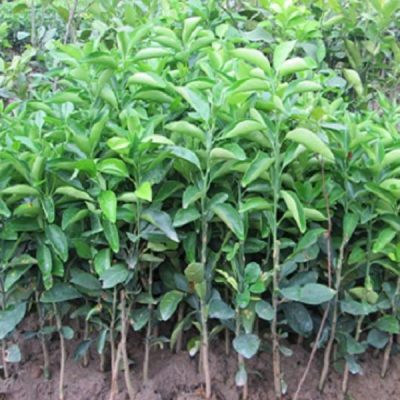
Currently, Xoan orange trees are propagated and cultivated using grafting or air-layering methods. When selecting saplings, choose robust, disease-free plants. Experience shows that choosing saplings grafted onto pomelo rootstock helps the trees grow faster, stronger, and achieve a longer lifespan.
Xoan oranges are best planted in early spring and early autumn. They yield harvests twice a year: the main crop from September to November, and the off-season crop in March and April.
Xoan oranges are not overly demanding regarding soil and can grow across various soil types. The most suitable soil is elevated, well-draining loamy soil that is free from severe acid-sulfate contamination.
Depending on the farming soil, planting mounds must be prepared accordingly:
In low-lying areas, build high mounds equipped with surrounding beds and drainage channels.
In flat, well-draining areas, moderate-height mounds are sufficient.
Before planting, loosen the soil thoroughly. Space the planting pits at least 3 to 4 meters apart, plow the soil deeply, remove weeds, and apply a basal dressing of agricultural lime for disinfection along with 10 kg of well-rotted manure per pit.
When planting, gently peel away the nylon bag from the root ball. Place the sapling upright and fill in the soil to cover the surface completely. Water immediately after planting to provide moisture and help the roots take hold. During the early stages, use bamboo stakes to support and secure the young Xoan orange trees, maintaining a spacing of 3 to 4 meters between trees.
Xoan oranges have moderate water requirements. They do not need excessive water; simply maintain consistent soil moisture, avoiding dry roots or prolonged waterlogging.
Xoan orange growers do not let the trees grow excessively tall. The goal is to encourage a broad canopy with plenty of side branches and twigs. This increases tree productivity and makes pest management and maintenance much easier.
Fertilizer rates depend on soil nutrient levels and the tree's developmental stage. For trees that have been harvested 2 to 3 times, fertilizer amounts are calculated based on the previous year's yield to compensate for nutrients extracted from the soil, ensuring proper replenishment.
Organic manure: 5–10 kg/tree/year
Chemical fertilizer: NPK 16:16:8
First year: Apply fertilizer 4 times a year, at about 200–300 grams per application.
Second year: Apply 400–600 grams divided into 3 applications per year.
Third year onward (productive stage): Apply 1–1.5 kg divided into 5 applications.
Post-harvest recovery application: Apply 1.5 kg of NPK fertilizer combined with 0.2 kg of urea and the full amount of organic manure.
Xoan oranges possess better disease resistance than other orange varieties; however, they can still encounter certain pests and diseases such as leaf miners, fruit borers, root rot, and yellow leaf disease. Regular orchard monitoring and careful inspection of individual trees are essential for early pathogen detection, enabling timely intervention using appropriate plant protection products.
Xoan oranges yield their first harvest 30 months after planting. It takes about 8 to 9 months from flowering to harvest. Harvest during dry, rain-free weather. Gently cut the stem of each fruit cluster, then use shears to separate individual fruits. Storing them in a cool, ventilated place helps preserve their freshness longer.
 Zalo
Zalo