HOTLINE: 0908 340 239
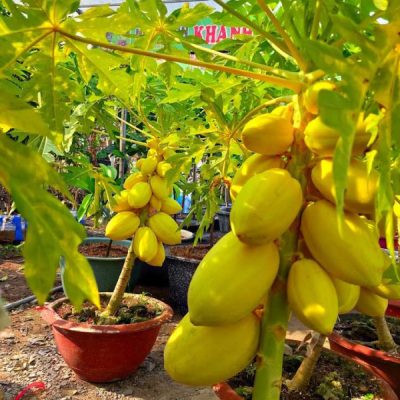
The Taiwanese papaya variety is widely cultivated in Vietnam today. It is an imported F1 hybrid from Taiwan with robust growth characteristics, high resistance to viral diseases, and a fruit yield of 60–70 kg per tree. Taiwanese papayas feature a yellowish-orange flesh color that is sweet, fragrant, and tender yet not mushy, along with a firm skin that facilitates easy storage and transportation. The fruits have an average weight of about 1.5 kg, with some specimens reaching up to 3 kg.
Seed Germination: Select seeds with a high germination rate. Soak the seeds in water, discard floating empty or half-filled seeds, and keep only the plump seeds that sink to the bottom. Soak the seeds in warm water (using a ratio of 3 parts boiling water to 2 parts cold water, known as "3 hot 2 cold") for 5 hours, then incubate them in a damp jute sack. The incubation period lasts 4–5 days; daily, pick out the seeds that have cracked open and sprouted to plant them.
Nursery Bag Preparation: Use nylon bags measuring 12x7 cm (with drainage holes). Take alluvial soil or light loam, pulverize it thoroughly, and mix it with decomposed farmyard manure at a ratio of 3 parts soil to 1 part manure to fill the bags. Sow one seed per bag, gently press the seed into the soil, and cover it with a thin layer of fine soil. Water to maintain moisture after sowing. Arrange the bags in trays and place them under a shelter protecting against sun and rain; setting up a net house is ideal if conditions permit.
Seedling Care: Water the plants daily with a sprayer to keep them sufficiently moist. When seedlings have 2–4 true leaves, water every 2 days. Adjust the shading structure so that young plants receive adequate light for optimal growth, ensuring they grow straight and sturdy. Keep weeds clean and manage pests and diseases for the seedlings. When seedlings develop 4–5 true leaves and reach a height of 15–20 cm, they are ready to be transplanted out of the nursery. Because Taiwanese papayas are F1 hybrids, their seeds cannot be saved for planting next generation.
Papayas can be planted in the spring crop (March–April) or autumn crop (September–October). Papayas begin flowering 2.5 months after planting, produce green fruits for harvest 7 months after planting, and ripen for harvest after 9 months.
Dig planting holes with dimensions (length/width/depth) of 60/60/30 cm, maintaining a spacing of 2.5x2 m between trees (approximately 2,000 trees per hectare).
After digging the holes, perform basal fertilization. For each hole, apply 10–15 kg of farmyard manure, 0.5 kg of superphosphate, 0.2 kg of potassium, and 0.5 kg of agricultural lime. Mix all fertilizers thoroughly with the topsoil and fill the hole.
Place the seedling bag in the center of the hole, use a sharp knife to gently slice and remove the nylon bag (without breaking the root ball), mound soil around the root ball, pack it firmly, and water the plant sufficiently to keep it moist. Cover the soil with straw or water hyacinth to retain moisture. Once the plant takes root and grows well, insert a stake and tie the plant loosely to protect it against wind, rain, and storms, gradually loosening the ties as the plant grows larger.
Top-dressing: Apply top-dressing 3 times during the first year: the 1st time 4–6 weeks after planting, the 2nd time during flowering and fruiting, and the 3rd time during fruit enlargement. Each application consists of 200g urea, 100g superphosphate, and 200g potassium. Dissolve all fertilizers completely in water and irrigate around the plant at a distance of 30–40 cm from the base.
Maintenance: When trees carry heavy fruit loads, stake them to protect against storms, prune away old leaves near the base, and clear drainage ditches to prevent waterlogging. Weed regularly and hoe to aerate the soil. During the dry season, mulch with straw around the base to retain moisture. In the following year, papaya trees usually decline in vigor; select and retain healthy trees, remove weak ones, and replace them with new seedlings. Care practices in subsequent years are identical to the first year.
Pests: Papayas may be attacked by mealybugs, flea beetles, stink bugs, red spider mites, etc. Spray with Decis 2.5 ND (0.1% concentration) or Trebon (1%) when pest densities are high.
Diseases: Common diseases include papaya ringspot virus, powdery mildew, and anthracnose. Prevention includes practicing proper crop rotation, selecting disease-resistant varieties, applying balanced NPK fertilization to keep trees strong and resistant, and early detection and spraying with Daconil, Topsin, Zineb, or Mancozeb (for fungal diseases like powdery mildew or anthracnose).
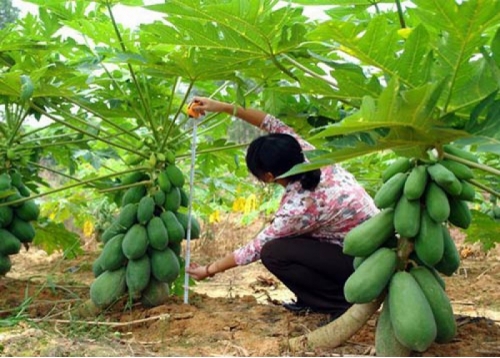
Papayas can be harvested for use as green vegetables 7 months after planting, while ripe fruits are harvested 9–10 months after planting. For ripe fruits, harvest when light yellow stripes appear on the skin; at this stage, dry matter accumulation in the fruit is maximized, ensuring good commercial quality upon ripening without being too green and bland. Each tree yields an average of 70 kg of fruit, with high-performing trees reaching 100–120 kg per tree.
 Zalo
Zalo