HOTLINE: 0908 340 239
DỊCH TIẾNG ANH NHA
The longan tree has long been known as a famous specialty of Hung Yen province. Beyond that, the nhãn lồng (basket-wrapped or cage-woven longan) has become an exclusive brand, a distinct characteristic, the very breath, and the pride of the land and its people here.
Although longan trees are grown in many places across the country, they truly "found their destiny" in Hung Yen because the fruit here is exceptionally heavy-yielding, and when ripe, its fragrance permeates the atmosphere. At Hien Pagoda, there is an ancient longan tree, which locals call the "ancestor longan tree" (cây nhãn tổ), considered representative of the locality. This ancestral longan tree even has an inscribed stone stele dedicated to it. Folklore has it that long ago, an imperial inspector happened to pass by during the ripe longan season. Upon tasting it, he found the aroma and sweetness penetrating every fiber of his being, captivating his soul. Knowing this was a precious specialty, he immediately presented it to the king. From then on, rumors of Hung Yen's longan spread far and wide across the royal capital. In subsequent years, at the beginning of autumn, locals would bring longans as a tribute to the king, which is why the fruit is also known as nhãn tiến vua (tribute longan). The great scholar Le Quy Don, upon tasting the tribute longan, described it as: "every time you put it in your mouth, it fills right down to your gumlines, and your tongue releases a fragrance as divine as nectar sent from heaven."
Longan trees bloom right in spring, amidst days of drizzle and cold. If greeted by warm, sunny weather, the fragrance gently diffuses, leaving people intoxicated with its sweetness. Although many places grow longans today—including regions with the exact same climatic conditions and soil composition—only Hung Yen's longan possesses that famously delicious flavor found nowhere else. Perhaps Hung Yen is uniquely fortunate, as the rare value and sweet taste of its longan trees have become a gift bestowed by nature exclusively upon this land.
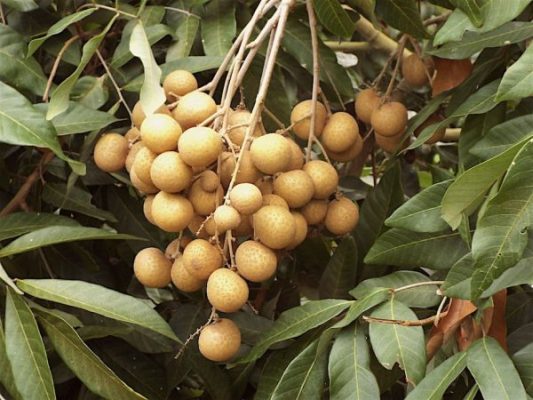
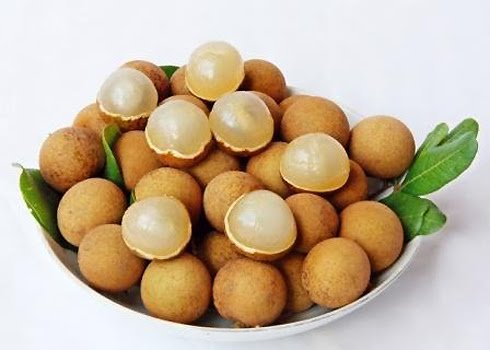
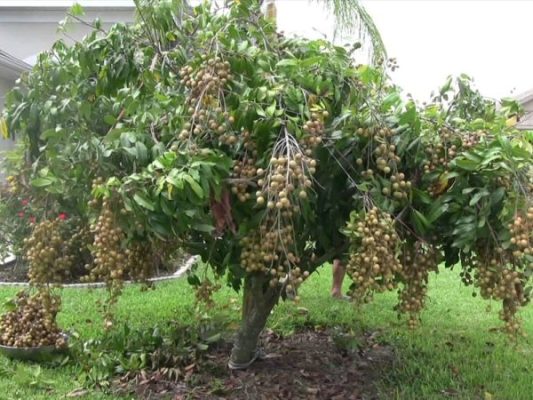
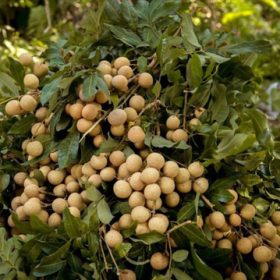
During July and August, it is the peak longan harvest season. Visiting Hung Yen at this time, anyone walking along the roads can practically reach out and touch smooth, heavy clusters of fruit. Hung Yen resembles a longan kingdom with thousands of heavily laden trees. The ripe orchards dye a corner of the sky golden, while bustling crowds flock in to buy longans, packing the streets. Every single fruit and every bite carries an unforgettable flavor that cannot be confused with anywhere else. Hung Yen longans are large and round, with a light yellowish-brown skin, thick flesh, and a dry texture. Peel away the thin, glossy skin to reveal a thick, ivory-white translucent pulp. Tasting it brings a sweet, aromatic, crispy, and chewy sensation. Inside lies a small, pitch-black seed. The aroma is also very distinctive—not overwhelmingly pungent, but gentle, pure, and refreshing.
People often wonder what microelements make the longans here taste so remarkably different from those grown in other regions. While that mystery remains unsolved, one has only to visit Pho Hien during the longan season to experience that special magic. The longan pulp is as clear as amber, the seeds are tiny, and the juice is refreshingly sweet with an exotic fragrance.
The people of Hung Yen are as deeply attached to the longan tree as flesh is to bone; every household garden features at least one. The bridal chamber of a bride marrying far away traditionally includes ten fresh longans or dried longan pulp (long nhãn) prepared in advance by her mother, symbolizing wishes for wealth, prosperity, and an enduring remembrance of her ancestral homeland. Fortunate beauties who married into noble, wealthy families would often demonstrate their culinary skills on their first day at their husband's home by making lotus seed and dried longan sweet soup (chè sen long nhãn) to win over their mothers-in-law.
Longan has truly become an exclusive "brand," a unique symbol, and the pride of Hung Yen province. Hearing the folk verse: "Whoever trades in the North and sells in the East / I challenge you to forget Hung Yen's longan," one suddenly remembers that right at this moment, the villagers are harvesting their crop...
 Zalo
Zalo