HOTLINE: 0908 340 239
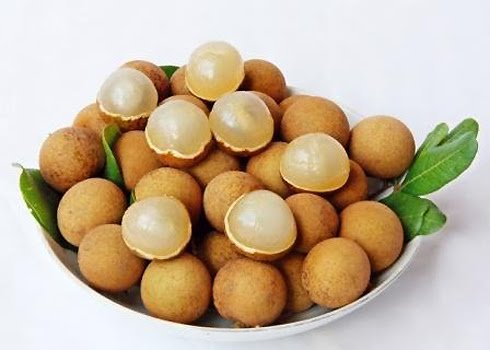
The Hung Yen super-sweet longan is a relatively new variety on the market, bred and selected from the traditional ancient nhãn lồng of Pho Hien. It was first introduced at the 2015 Hung Yen Agricultural Product Fair, where it received an overwhelmingly enthusiastic response.
When thinking of longan, Hung Yen's nhãn lồng immediately comes to mind. Stepping into the region, you encounter this specialty fruit everywhere: from roadsides to home gardens.
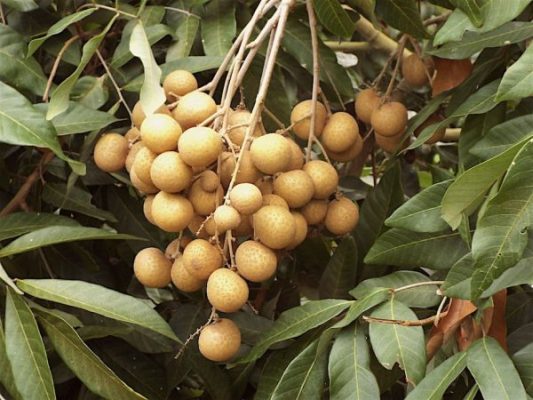
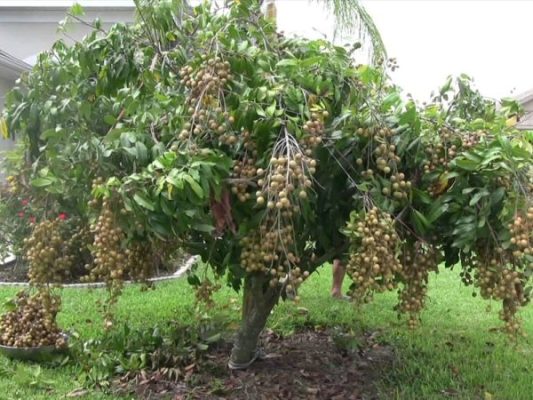
The super-sweet longan is a new variety yielding fruits at an average weight of 55–60 fruits/kg, growing in very heavy clusters. The fruit features a smooth skin (not rough), thick flesh, abundant juice, and a small seed. When eaten, it offers an intensely rich, sweet flavor that gradually melts on the tip of the tongue—a quality unmatched by any other longan variety.
Super-sweet longans are very easy to grow and care for, with low susceptibility to pests and diseases. Because they are selected and bred from purebred longan stock, they possess natural resistance to basic pests and the commonly encountered witches' broom disease (bệnh chổi rồng). Consequently, many farmers in Hung Yen and other localities now choose this variety for economic development.
This variety is harvested during the main crop season, slightly later than traditional varieties—typically from mid-July to August annually.
There are two main methods of differentiation: via the leaves and via the ripe fruit. Leaf identification is generally applicable only to nursery operators or experienced longan growers familiar with various types.
Super-sweet longan leaves have a glossy green color with a smooth upper surface, while the underside is rougher and lighter in color. The leaves are elongated and slightly wider near the tip. Compared to traditional nhãn lồng leaves, they are larger, longer, and slightly thicker.
The fruit skin has a bright yellow-brown hue resembling smooth eel skin, without a rough texture. The ivory-white flesh is very juicy, and the seeds are relatively small.
The Science Council of the Ministry of Agriculture and Rural Development (MARD) has officially recognized three new late-crop longan varieties and permitted their regional cultivation across Northern provinces:
PH-M99-1.1 (Pho Hien Muon): Selected from elite mother trees in old Chau Giang district, Hung Yen. Features thin, light-green leaves with slightly wavy margins and broad blade surfaces. Fruits are round, bright yellow, thick-skinned with prominent protruding bumps, and crack-resistant. It has a rich, sweet taste with low aroma, a Brix degree of 20.1%, and an average yield of 200 kg/tree. Harvest period spans from August 15 to September 15.
PH-M99-2.1 (Pho Hien Muon): Selected from elite mother trees in Tien Lu district, Hung Yen. Features thick, dark-green leaves with slightly wavy margins and blades. Fruits are round, bright yellow with smooth skin. The flesh is thick, easy to peel, crispy, dry-textured, fragrant, and opaque white. Brix degree is 21.6%, with an average yield of 200 kg/tree. Harvest period runs from August 20 to August 25.
HTM-1 (Dai Thanh): Selected from a 100-year-old ancestral longan tree in Dai Thanh commune, Quoc Oai district (Ha Tay). Features vigorous growth, dark-green leaves with broad, thin blades, and medium-large flower clusters. Fruits are bright yellow, thin-skinned, often slightly crooked, with translucent white, crispy, juicy, and fragrant flesh. Brix degree is 21.9%, with an average yield of 300 kg/tree. Harvesting occurs from September 1 to September 20, making it the latest-ripening longan variety.
Super-sweet longans exhibit stronger disease resistance than traditional nhãn lồng, allowing them to adapt well to various climates and soil profiles. However, practical experience shows that super-sweet longans thrive best in loose sandy-loam soils with excellent drainage capacity.
 Zalo
Zalo