HOTLINE: 0908 340 239
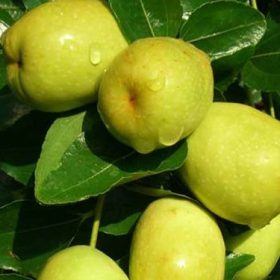
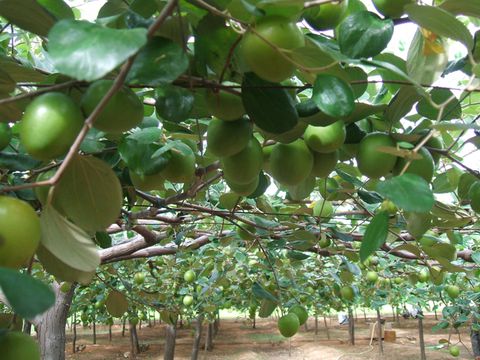
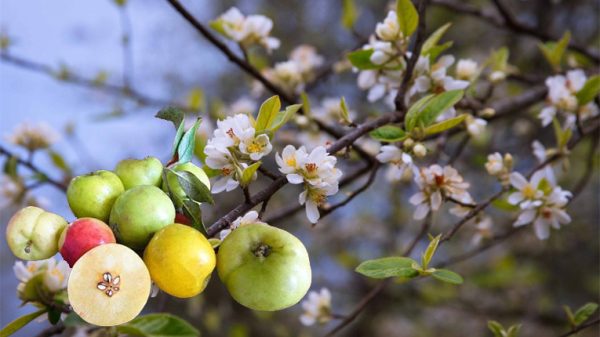
Thanks to successful mutation breeding methods applied to native apple strains, the golden peach apple (táo đào vàng) has emerged, boasting prominent characteristics such as large fruits, beautiful coloration, and an exceptionally fragrant, sweet flavor that surpasses other varieties.
When encountering golden peach apples, consumers often assume they are an imported variety due to their large size and eye-catching golden hue. However, few know that this is an indigenous Vietnamese tree variety researched and developed by engineers and professors utilizing gene mutation techniques. Due to its remarkable success, the golden peach apple was officially recognized as a National Crop Variety in 1998.
Fruit Quality: This variety delivers exceptional fruit quality. The fruit features an elongated, glossy, golden-orange rind. Upon tasting, you experience immediate crispness and sweetness, followed by a mellow, nutty undertone and a refreshing aroma radiating from the flesh.
Size & Economic Value: Because of its large size, there are about 25 fruits per kilogram. It commands favorable market prices, offering nearly double the economic return compared to conventional apple cultivation.
Growth Vigor: Cultivated across various regions nationwide, the golden peach apple is recognized as a vigorous and healthy crop. It exhibits early ripening, stable productivity that increases annually, and immense potential for future agricultural economic development.
The golden peach apple is best planted during the spring season, from February to April each year. The favorable weather conditions during this period allow rapid growth and development, ensuring an abundant harvest by the end of the year.
Propagation: Currently propagated via grafting, ensuring quick harvesting, robust growth, high longevity, and resistance to degeneration.
Selection Criteria: Choose healthy, disease-free saplings featuring complete anatomical parts, including vigorous leaf buds and intact root systems. Premium saplings guarantee superior resilience, minimal disease susceptibility, and high productivity.
Thoroughly clear weeds and plow/harrow the soil prior to planting. For low-lying or waterlogged areas, construct raised planting beds approximately 50 cm high.
Dig planting pits measuring 40 x 40 x 40 cm.
Apply a basal mix of well-rotted organic manure, superphosphate, and agricultural lime.
Blend the fertilizers evenly with the soil and allow the pit to cure for about 1 month before introducing the saplings.
Dig a small hole right in the center of the prepared pit, place the root ball of the sapling upright, and backfill the soil around the base. Pack the soil firmly and irrigate immediately to supply essential moisture, maintaining consistent watering for the first 2 months.
Apples have high water requirements. Supply adequate moisture post-planting, particularly during the dry season, the flowering phase, and close to fruit ripening.
Weed Management: Clear weeds regularly to prevent nutritional competition. Apply a surface mulch of straw around the base to reduce water evaporation during dry spells and suppress weed emergence.
Soil Cultivation: Periodically break surface crusts (xới phá váng) after heavy downpours to keep the root zone well-aerated.
Although golden peach apple trees do not grow excessively tall, their lateral branch canopy spreads out significantly, making periodic pruning essential.
Post-Harvest Pruning: After each harvest, cut back branches that have already borne fruit, leaving a 30 cm stub to sprout new fruiting twigs for the following season. Prolific branching directly increases fruit yield.
Canopy Maintenance: During the fruiting phase, prune away vigorous water sprouts (cành vượt) and dense brush to open up the canopy, ensuring optimal sunlight penetration for all fruits.
During the first year, supplemental fertilization is required to accelerate canopy and leaf development.
Early Care: One month after planting, apply diluted liquid fertilizer depending on tree vigor.
Periodic Top-Dressing: Subsequently, apply NPK compound fertilizer monthly. Use 0.2 to 1.5 kg of Sitto Phat 16-16-8-15SiO2+TE per plant per application, varying amounts based on tree size.
Application Method: Use a hoe to loosen soil in a circle around the base matching the outer canopy drip line (5–10 cm deep), spread fertilizer, cover with soil, and water.
Symptoms: Adult flies lay eggs on the surface of ripening fruits. Eggs hatch into maggots that bore into and ruin the fruit.
Control Measures: Harvest fruits earlier, use bait traps, and spray biological preparations such as Ruvacon.
Symptoms: Feed by sucking sap from young leaf shoots and flower stalks, causing premature flower drop, curled young leaves, and stunted shoots, which directly impacts future yields.
Control Measures: Promptly apply insecticides such as Applaud or Admire to eradicate the pest and prevent spreading across the orchard.
Trees begin producing economic harvests by the second year after planting. Ripe fruits display a glossy golden hue and feel solid and heavy in hand. Harvesting should be conducted during sunny, dry weather rather than during rain to maximize sweetness. Store harvested fruits in a cool, ventilated area to maintain freshness and quality.
 Zalo
Zalo