HOTLINE: 0908 340 239
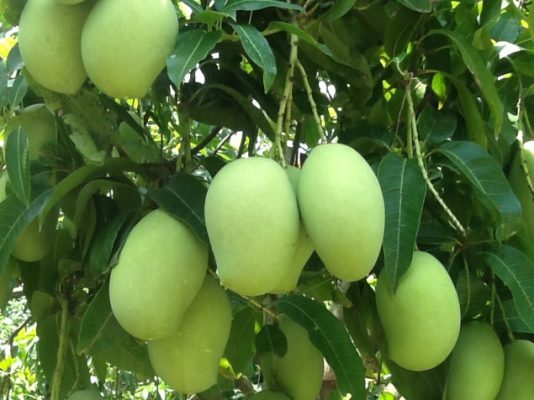
When eaten unripe, this strange mango variety has a crisp texture, while when ripe, it offers an appealingly sweet and fragrant taste. "Keo" mango (crisp mango) has become a widely talked-about fruit that is especially favored by the people of Saigon.
Whenever the season arrives, you will see Saigon’s streets dyed with the golden hue of crisp mangoes dipped in chili salt—an irresistibly delicious snack. It is an extremely popular dish in Saigon; anyone who tries it once will want to buy it again because they cannot forget the mild, tangy flavor of the Keo mango.
The Keo mango is a variety imported from Cambodia. Nowadays, they are widely cultivated in the southern provinces. Since their appearance, they have outperformed almost all other mango varieties due to their deliciousness, whether green or ripe.
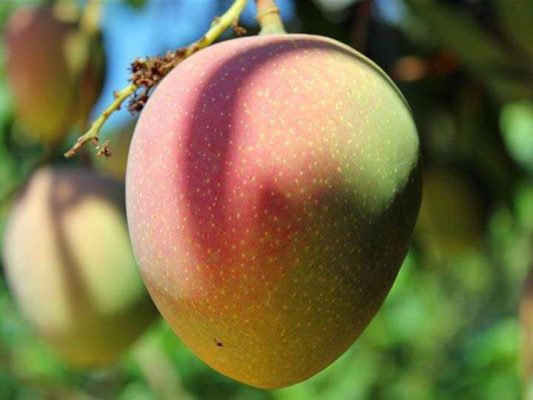
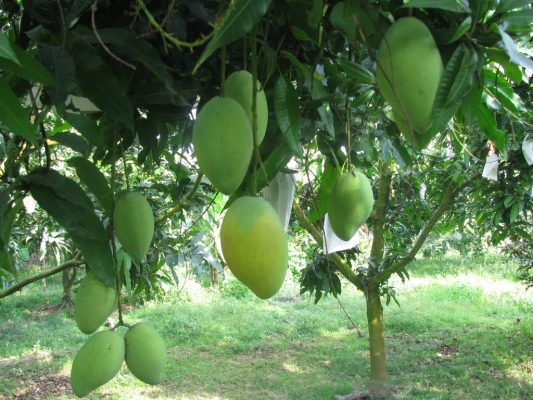
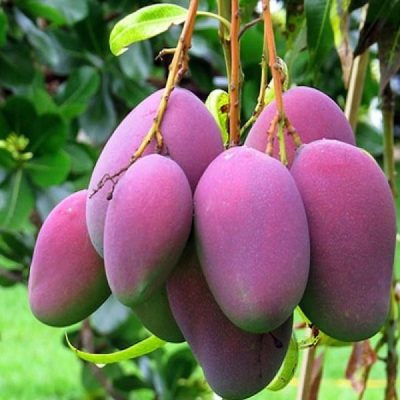
The Keo mango produces fruit that is plump in the middle and tapers toward both ends. The fruit has thin, green skin, yet the flesh inside is already golden. While other mango varieties are very sour when green and only good and sweet when ripe, the Keo mango is said to possess both of these advantages. When unripe, the fruit is mildly sour and crisp, whereas when ripe, the Keo mango becomes sweet and aromatic. Because of this advantage, the Keo mango is favored in both the North and the South. Hanoians tend to eat them mostly when ripe, while Saigonese are infatuated with green Keo mangoes dipped in chili salt.
According to many Keo mango gardeners and fruit variety engineers, this variety is not difficult to grow, and its care is not overly demanding—as long as the right techniques are applied, it will yield large, beautiful fruits.
Keo mangoes are not picky about soil and have good waterlogging tolerance. You can grow mangoes in various types of soil, such as alluvial soil, fertile loam, and even saline coastal areas.
However, the soil must be well-drained, loose, with a soil profile at least 2 meters deep, and a pH level ranging from 5.5 to 7.
Keo mango trees are grown using two main methods: growing from seeds and grafting.
Growing from seeds: Although this method is easy, it is only suitable for small-scale cultivation models. Furthermore, seed-propagated trees are slow to bear fruit.
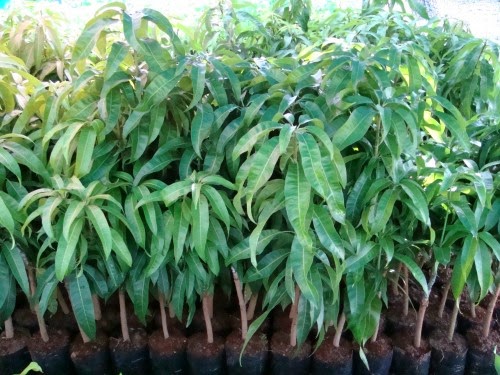
Grafting method: This is a modern method suitable for large-scale production. In particular, this method retains 100% of the genes from the parent tree to the offspring, yielding very high quality. To perform grafting, select a healthy parent tree that bears uniform and high yields. Choose the best branch to graft. After the sapling develops roots, separate the grafted branch and plant it in a small nursery pot. After 1 month, the young sapling is ready to be planted in its new home.
According to the successful growing experiences of many orchard owners, Keo mango trees are best planted during the rainy season. Because of the frequent rain, it requires less maintenance labor and provides better growth.
Since Keo mango trees have tall trunks and wide canopies, you need to maintain a minimum distance of about 5 meters for each tree.
Before planting, you need to treat the soil and dig holes in advance. The hole size should be approximately 50x50x50 cm. For each hole, mix basal fertilizer with 10 kg of decomposed farmyard manure, 1 kg of powdered lime, and 1 kg of Super Phosphate fertilizer. After mixing, refill the hole with soil and leave it for 1 month before planting.
After thoroughly preparing the soil and the young saplings, dig a small hole right in the center of each sapling's nursery bag. Next, gently place the sapling inside and position it straight. You can insert a stake to support and secure the sapling to prevent wind from knocking it over. Then, maintain regular watering for the first week to help the sapling root quickly and return to healthy green growth.
Most mango varieties love moisture, so it is important to water adequately during each stage for optimal tree growth. The irrigation water source must be clean and free of heavy metals. During the dry season, increase the watering volume. During the rainy season, ensure good drainage for the trees.
To help the Keo mango tree grow well and bear many large, beautiful fruits, you need to periodically prune and shape the canopy. When the tree reaches a height of 1 meter or more, you can prune the tip to create primary (level 1) branches. When a main branch is cut, two lateral branches will grow out. Similarly, as the level 1 branches develop well, continue pruning to form level 2 and level 3 branches. A tree only needs about 3 to 4 level 1 branches for a nice shape. Pay attention to thinning to make the branches more airy so that the fruits can receive plenty of sunlight later on.
To ensure good fruit quality, you need to fertilize the trees periodically. In the first year, apply about 200 grams of NPK fertilizer per root per time every 2 months. In the mature stage, increase the annual fertilizer amount by 15%. Note that during the flowering, fruiting, and post-harvest stages, you need to increase the fertilizer dosage.
According to many orchardists, cultivated Keo mango trees suffer from fewer pests and diseases than other mango varieties. For optimal growth, you should regularly clear weeds and loosen the soil. You can intercrop short-term crops to limit weed growth while providing nutrient sources for the soil. Some pests and diseases to prevent include fruit flies, red spider mites, leafrollers, etc. You can prevent them by spraying biological crop-protection products and using fruit-bagging methods with plastic bags that have ventilation holes at the bottom.
It takes about 18 months from planting to harvesting Keo mangoes. When ripe, the mango skin turns a bright yellow, the fruit size is large, and it has a fragrant aroma. However, once the mango reaches standard size, you can harvest it even before it is fully ripe because Keo mangoes can be eaten while still green. Try to harvest during dry, sunny weather and handle the fruit gently, storing it in a cool, well-ventilated place.
For any information regarding fruit tree varieties, please feel free to contact us for free advice on the best planting and care methods. With a young yet experienced team of engineers working with youthful passion, we hope to accompany gardeners and tree growers.
 Zalo
Zalo