HOTLINE: 0908 340 239
1 – Introduction:
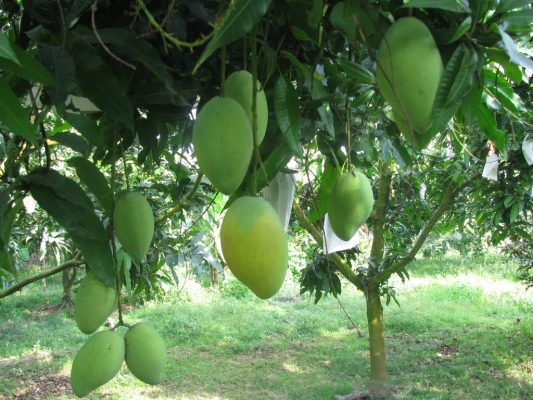
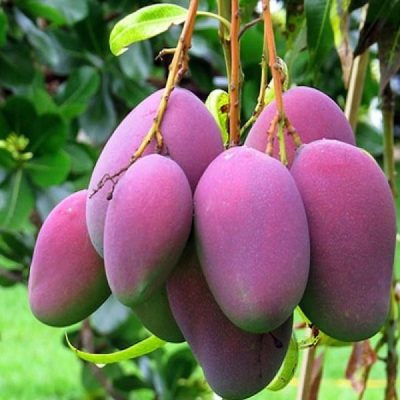
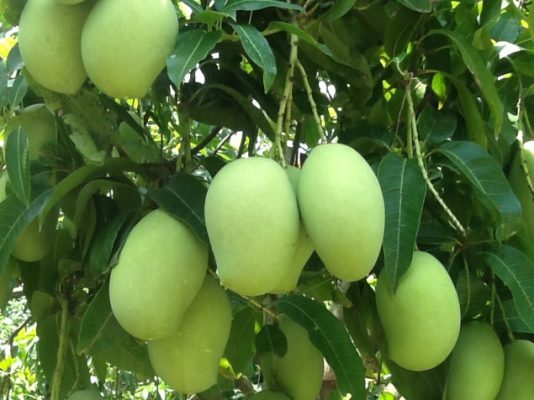
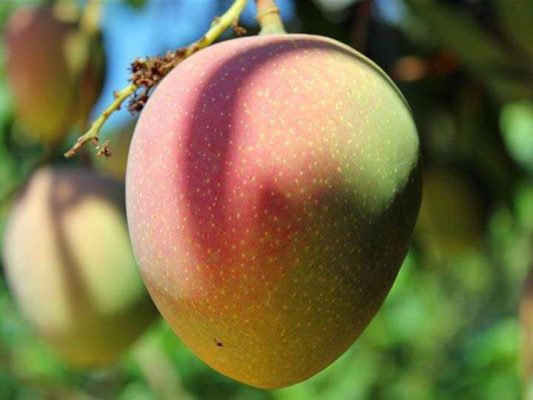
The Australian mango originates from Australia, featuring large, round fruits with an average weight of 800g per fruit. It has a mildly sweet flavor, firm flesh, and low fiber content. When ripe, it develops a beautiful pinkish-yellow blush on the fruit's shoulder. The period from flowering to harvest takes about 4 months. Having been introduced to Vietnam for about 10 years, the Australian mango holds quite high economic value. A one-hectare farm planted with the true plant variety of Australian mangoes can yield a profit of around 200 million VND per year. Because it is easy to grow and resistant to pests and diseases, an increasing number of farmers in the Southern region choose to purchase them from reputable good-priced Cai Mon nurseries for cultivation.
2 – Variety Selection Standards (True Plant Variety, Good-Priced Cai Mon):
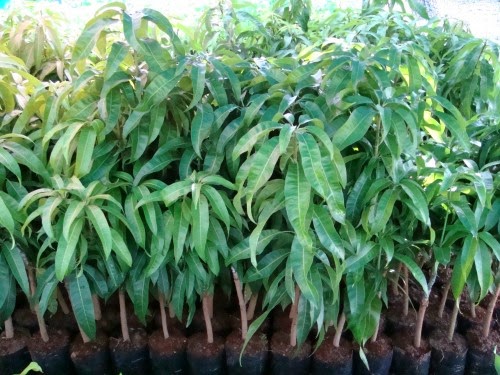
When establishing a commercial orchard, growers should select true plant variety grafted trees from top-tier good-priced Cai Mon nurseries to ensure the plants are robust, disease-free, and true to the Australian mango characteristics. The graft union should be located 15–20 cm above the rootstock base, with a plant height of 50–70 cm measured from the top of the nursery bag.
3 – Planting Season and Density:
Plant mangoes at the beginning of the rainy season, from May to July, to ensure sufficient irrigation water during the initial establishment phase.
Planting distance depends on soil fertility, but the standard density is typically 6x6m or 8-9m per tree, which can be arranged in a square pattern. For DT-15 mangoes, a denser spacing of 3x3m per tree can be applied, provided that canopy pruning is performed regularly. However, in elevated or highland areas, trees should be planted further apart to allow for larger canopies and a longer lifespan.
4 – Land Preparation and Pit Digging:
Dig planting pits with dimensions of about 60x60x60 cm. Mix each pit's topsoil with 30–50 kg of well-rotted organic manure, 0.5 kg of powdered lime, 0.5 kg of superphosphate, and 1 teaspoon of copper sulfate (green vitriol). Fill the pits with this mixture and leave them for 20–30 days before planting. When planting, mix an additional ~2 kg of microbial organic fertilizer per root zone.
5 – Basal Fertilization:
Basal fertilizer application per pit: 20–30 kg of decomposed farmyard manure + 1–2 kg of superphosphate + 0.1 kg of potassium + 0.3–0.5 kg of powdered lime. Mix the fertilizers thoroughly with the soil and fill the pit level to the brim (this task should be completed about 1 month before planting).
6 – Australian Mango Planting Technique:
Dig a small hole right in the center of the pre-prepared pit, carefully tear off the nylon nursery bag, and place the true plant variety sapling in the middle. Fill in the soil level with the root collar and firm it gently around the base. Afterward, place two stakes in an X-shape and tie the tree securely to prevent the wind from shaking the roots, which could cause the plant to die. After planting, mulch the base with straw or decomposed plant debris and water continuously for the first month to maintain the necessary moisture for root development.
7 – Australian Mango Care Techniques:
7.1 – Routine Care:
Irrigation: Provide adequate water for the trees, especially during the dry season, when fruits are expanding, and right before ripening.
Weed Control: Mulch the base with grass, debris, or green manure crops to suppress weeds; break the soil crust after heavy rains. Weed during spring (January–February) and autumn (August–September), clearing the entire area once per season; cultivate the root zone 2–3 times a year.
7.2 – Pruning and Shaping:
Mangoes flower and bear fruit at the tips of branches. Forming a well-rounded canopy that receives sunlight from all directions facilitates flowering and fruit setting. When the tree reaches a height of 1m, prune the main stem back to about 0.8m. Once 5–7 new branches develop, select 3 strong primary scaffold branches radiating in three directions (Tier 1). When Tier 1 branches grow 0.5–0.8m long, prune them back to leave 3 secondary branches (Tier 2), and similarly select 3 tertiary branches (Tier 3) from Tier 2. Afterward, stop pruning and let the tree grow naturally to establish a sturdy framework and a rounded canopy.
Annually after harvest, prune away diseased branches, inner shaded branches, and unbalanced limbs to keep the canopy open and well-ventilated. Pruning should be done immediately after fruit harvest to easily manage the subsequent flowering induction.
7.3 – Fertilization Techniques:
Young tree stage: Apply 100–150 grams of NPK 20-20-15+TE fertilizer per root per application. For young trees in their first year, dissolve the fertilizer in water and apply every 2 months.
Mature fruit-bearing stage: Increase fertilizer amounts after harvesting to provide sufficient nutrients for the next crop cycle. Avoid excessive urea application on fertile soils.
Applying too much urea and potassium on certain mango varieties can cause fruit cracking and an astringent taste. In such cases, supplement with agricultural lime or CaSO4. Prune out diseased and vigorous water sprouts to prevent disease spread.
8 – Pest and Disease Management for Australian Mangoes:
Anthracnose: Causes black rot of flowers, flower drop, and black rot on fruits. Spray with Benlat C or Score 250 EC every 7 days from blooming until 2 months after, then once a month thereafter.
Powdery Mildew: Infects and damages leaves, flowers, and fruits, particularly flower clusters. Use Ridomil MZ 72WP, Anvil 5SC, etc.
Sooty Mold: Caused by aphid secretions; use Bassa 50 EC, Trebon 2.5 EC, or copper-based fungicides.
Leaf Blight: Develops during the rainy season, primarily damaging leaves. Prevent by cutting off diseased leaves and spraying with Ridomil MZ 72 WP, Kasumin 2L, etc.
Stem and Branch Borers: Use light traps to catch adult moths; inject strong fumigant or systemic insecticides such as Actara 25 WG or Padan 95SP into the holes, and seal them with clay to kill the larvae.
Mango Leaf Hoppers: Nymphs secrete fluids causing damage during hot weather, stunting mango growth. Highly active from October of the previous year to June of the following year. Use Bassa 50 EC, Trebon 2.5 EC, Supracide 40 EC, Song Ma 24.5 EC, etc.
Fruit Flies: Flies pierce mature fruit skins to lay eggs underneath; larvae feed on the flesh, causing rot and fruit drop. Use Sherpa 25 EC, Luc Son 0.26 DD, Padan 95 SP.
Shoot Blight: Caused by the fungus Botryodiplodia theobromae (Diplodia natalensis), attacking branches, leaves, and fruits. Young branches develop dark spots spreading to leaves, which turn brown with upward-curling margins. Gum exudation can be observed on infected branches. Splitting infected branches reveals brown streaks inside due to damaged vascular bundles. The disease thrives in high humidity and spreads rapidly in the rainy season. On fruits, the skin around the stem becomes water-soaked and dark, expanding into black circular patches, causing rot within 2–3 days.
Control Methods: Spray with Bordeaux mixture periodically upon detection. For harvested fruits, they can be dipped in a diluted borax solution at a 0.06% concentration.
9 – Harvest and Storage:
Harvest Time: Harvest when the fruit is mature, displaying a bright pinkish-purple skin color characteristic of the variety. Harvesting should ideally be done during cool, dry weather.
Classification and Transport: Sort harvested fruits. For long-distance transport, pack them into crates or boxes with no more than 5 layers (use straw or paper between layers to prevent bruising). Post-harvest sanitation includes cleaning around the tree canopy, pruning old or diseased branches, and resuming routine care. Purchase the true plant variety of high-quality Australian mangoes with certified origins from good-priced Cai Mon nurseries today to welcome a bumper crop season!
 Zalo
Zalo